AI agents at work
– 10 min read
From days to minutes: how event teams built their post-event brief playbook

Event teams know the drill. You wrap up a conference, gather feedback across marketing, sales, and ops, then spend the next week trying to synthesize everything into a coherent brief. Multiple meetings. Endless Slack threads. Reformatting to match the template. And by the time you’re done, you’re already planning the next event.
What if that 35-page post-mortem could become a comprehensive event brief in 30 minutes instead?
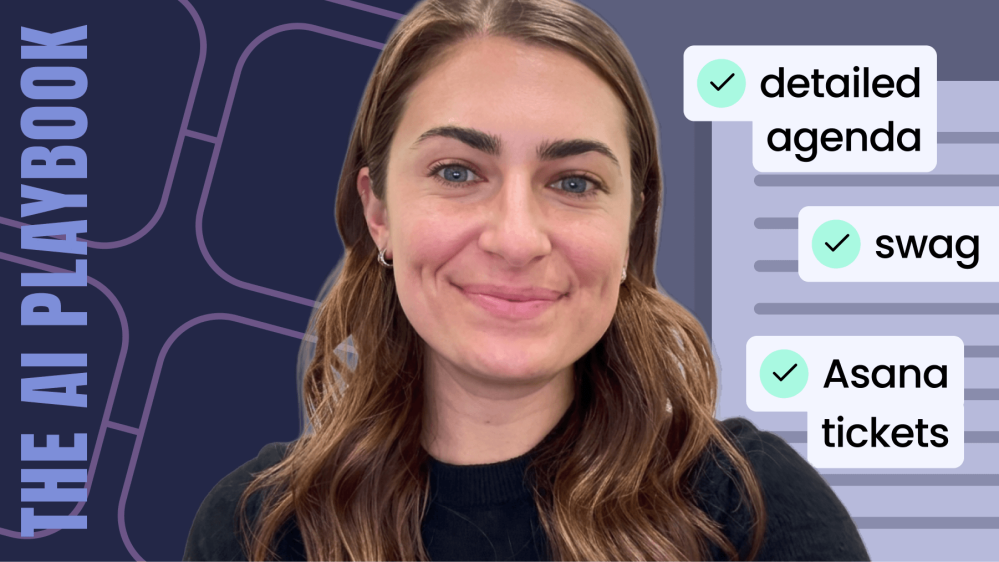
That’s exactly what one event team accomplished with WRITER Agent and Playbooks. They took their conference post-mortem — dense with learnings about booth traffic, session performance, demo feedback, and sales opportunities — and transformed it into a polished event brief plus a complete Asana project plan. The brief captured everything: which booth location drove the most traffic, which session formats generated qualified leads, how attendees responded to product demos, and three pipeline opportunities worth $2 million attributed directly to the event.
The old way? Days of coordination. Manual synthesis. Multiple rounds of reviewing to ensure brand consistency. Reformatting to match executive expectations. Often delayed, sometimes incomplete. By the time the brief was finalized, momentum disappeared and endless document versions buried the actionable insights.
The new way? Upload the post-mortem. Run the Playbook. Get the brief and project plan in under 30 minutes. Everything structured, formatted, and ready for executive review.
Here’s what makes this work. The Playbook doesn’t just summarize — it analyzes. It extracts lessons learned, ROI metrics, attendee feedback themes, and sales wins automatically. But the really clever part happens before the brief gets finalized. It runs through two custom skills that the marketing ops team built — one that makes sure all product positioning aligns with the current go-to-market strategy, and another that structures everything according to the team’s standard brief format. No manual reformatting. No messaging drift. No version control nightmares.
Those custom skills? Built using simple natural language conversation. Something that used to require multiple rounds of cross-functional reviews and template wrangling now happens automatically in the workflow. The skills ensure every brief matches the exact format executives expect and reflects the latest product messaging without manual verification.
The Playbook itself? WRITER Agent can generate it from a single prompt. “I need a playbook that takes an event postmortem and creates an event brief with lessons learned, ROI, feedback, and a project plan in Asana.” About a minute later, you have an automated workflow that guarantees every event builds on learnings from the last one. No need to understand complex automation logic or write code.
The interesting question isn’t whether AI can automate this kind of work — it obviously can. The question is how those custom skills actually work, how teams create playbooks in under a minute, and what this looks like when you’re clicking through the actual interface. How does the Playbook know which metrics matter? How do custom skills understand your brand guidelines?
Watch the full video to see the step-by-step process and understand how this team turned post-event chaos into a repeatable 30-minute workflow.