
Enterprise transformation
– 6 min read
The London wake-up call: What happens when marketing leaders stop piloting and start building

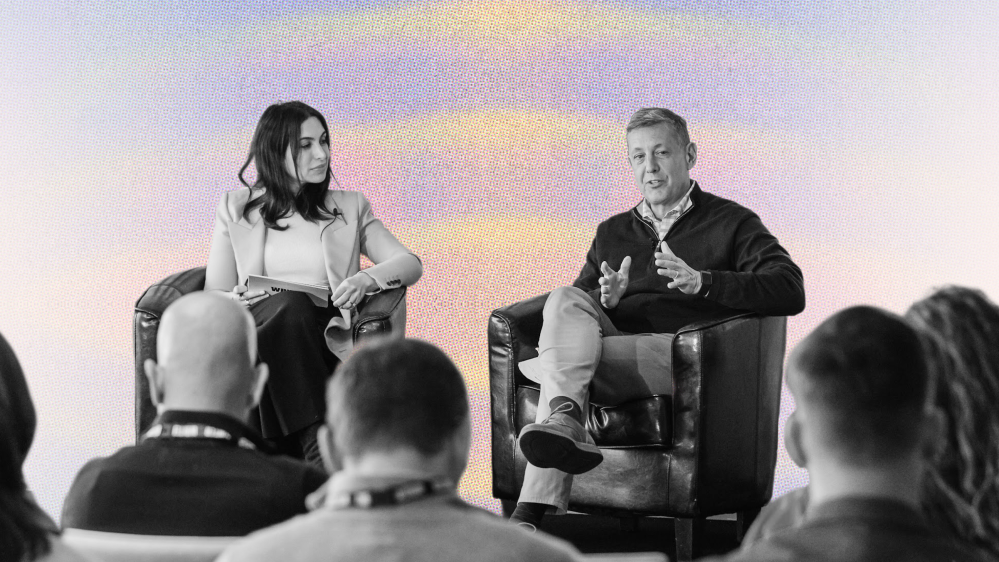
Standing in front of a room full of enterprise marketing execs, Colin Kelton, CMO of Vanguard, delivered a wake-up call: “If you don’t lead transformation, it will be forced on you. And if you’re looking for your next CMO role without native AI fluency, no one is hiring CMOs who don’t understand this.”
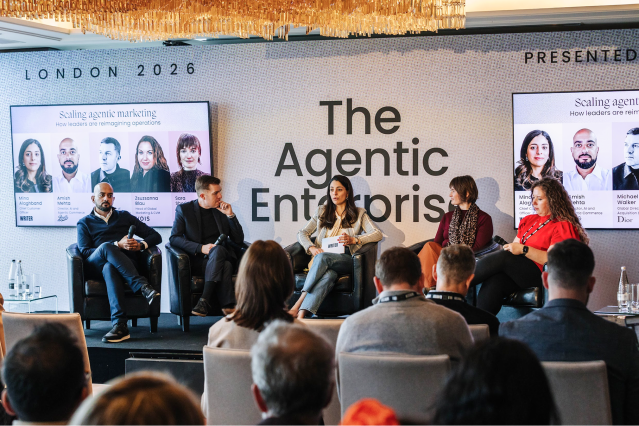
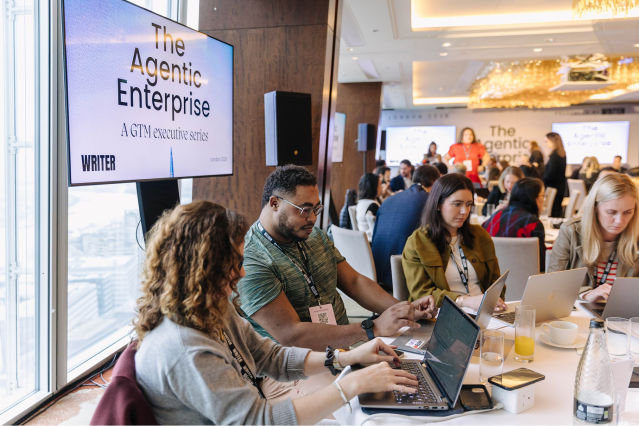
Over 100 marketing executives from companies like Monzo, Vanguard, Dior, Boots, Beauty Pie, and Vodafone gathered at Shangri-La at The Shard for a half-day deep dive into agentic marketing — not aspirational roadmaps or theoretical possibilities, but the real work of transforming how marketing gets done.
Production at scale: The new baseline
The pilot phase is over. Marketing leaders are moving from experimentation to production systems that deliver measurable business value.
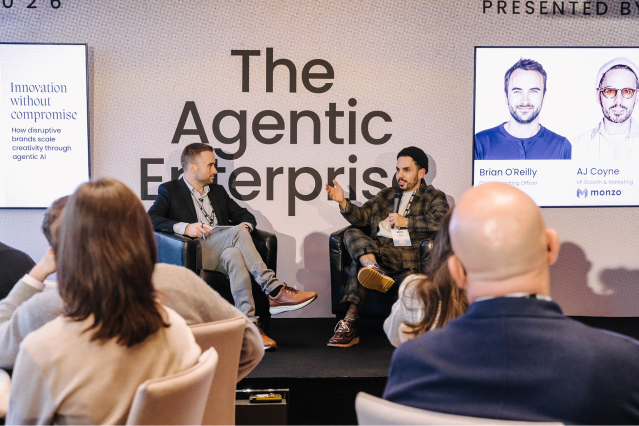
AJ Coyne, VP Marketing & Growth at Monzo:
- 95% of content and briefs are AI-generated
- Annual reports collapsed from 4 months to 4 weeks with WRITER
- Team capacity freed to focus on creative, strategic work
Colin Kelton, CMO at Vanguard:
- Collapsed 37-step processes to 5 steps
- Turned 6-week workflows into days
- Rebuilt workflows from first principles, not just optimized existing ones
Additional production wins:
- Boots: Audits thousands of web pages in minutes—work that previously took weeks with external agencies
- Dior: Scaled content across 14 languages while maintaining brand integrity
- Beauty Pie: Deployed 20 agents in 5 months
- Vodafone Intelligent Solutions: Approaching 200 live agents by summer with 140+ use cases in the backlog
The strategic shift: From productivity to differentiation
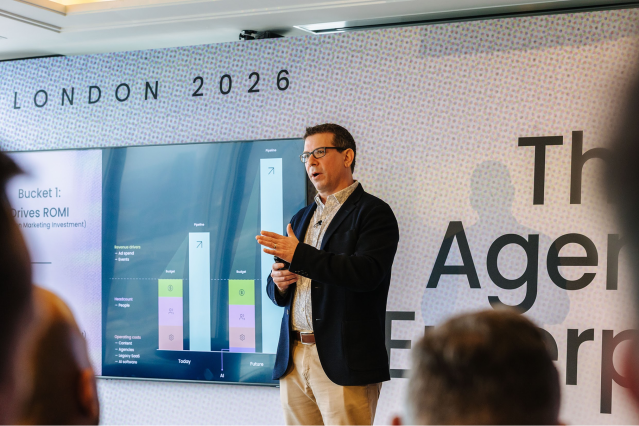
Diego Lomanto, WRITER’s CMO, opened the day with a framework that reoriented the entire conversation:
The Three-Stage Transformation:
- Productivity creates capacity
- Capacity enables differentiation
- Differentiation unlocks agility
Most teams stop at stage one — celebrating productivity gains while missing the transformative potential. The leaders who win are orchestrating end-to-end workflows, not just optimizing individual tasks.
Differentiation: Doing work that wasn’t possible before
The 16% competitive advantage
Zsuzsanna Andrea Blau from Vodafone Intelligent Solutions shared a statistic that stopped the room: 16% of the global population lives with a significant disability—that’s 1.3 billion people. In the UK alone, 11 million people with significant combined spending power face barriers on inaccessible websites.
Vodafone built an accessibility audit agent—not as a compliance checkbox, but as a competitive advantage. The agent audits web pages against compliance guidelines, provides contextual fixes, and integrates directly into their CMS. What used to take months now happens in minutes.
This demonstrates what differentiation looks like in 2026: doing work that wasn’t possible before, not just doing existing work faster.
Sovereignty: Encoding your DNA in AI agents
Your competitive edge isn’t AI adoption—it’s AI that encodes your organizational DNA. That’s sovereignty.
The harder question: Does your AI encode your brand voice, your processes, your organizational intelligence?
Dior: Brand integrity at scale
In luxury, there’s natural skepticism around AI. How do you maintain brand integrity when scaling content creation?
Michael, a senior marketing leader at Dior, shared their approach: encode brand voice directly into the system from day one. The team involved brand content experts, trained agents on validated brand materials, and ran blind tests—WRITER-generated content against human copywriters.
The result? Even brand purists couldn’t distinguish between AI and human output. Now Dior scales across 14 languages while maintaining the distinctive voice that defines the brand.
This is Sovereignty in action: agents that speak with your brand voice, follow your processes, and respect your governance—amplifying your organizational intelligence rather than replacing it with generic outputs.
Governance & enablement: Rolling out at scale
Beauty Pie: Guardrails, not gatekeeping
Sara Sheridan from Beauty Pie emphasized the importance of enabling rather than controlling: “When you’re working at enterprise scale, if AI only works for your technical people, you’re leaving most of your team behind.”
Beauty Pie’s governance enables speed. The team deployed 20 agents in 5 months by setting clear guardrails instead of gate-keeping every decision. Their approach: involve the team from day one, establish boundaries, then empower people to move fast within those guardrails.
Governance isn’t about locking things down — it’s about creating the framework that lets people move fast without breaking things.
The CFO perspective: Strategic rebalancing
In his keynote talk, Diego Lomanto revealed that a Friday evening call from Roger Kopfmann, WRITER’s CFO, illustrated what the transformation looks like from the finance perspective. Instead of budget scrutiny, Roger offered something remarkable: “I’ve been looking at your spending. You’re spending less on agencies and content production, and moving that money into ads and events. I admire that.”
In 25 years of marketing, this was the first time Diego heard a CFO admire how marketing spends money.
The insight: Marketing unlocked a strategic rebalancing—getting more efficient in enablement to invest more in high-ROI activities. That $1 million shifted into return-generating activities drives $20 million in pipeline. The efficiency play became a strategic transformation.
The future of work: Elevating human creativity
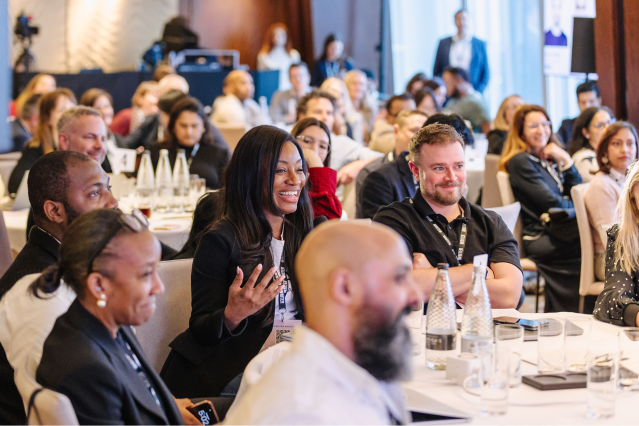
As AJ from Monzo emphasized, the real transformation is about people: “Our creatives have more time to do things closer to their hearts.”
When teams are freed from repetitive execution, they focus on work that compounds—the strategic, creative thinking that actually moves the business.
Amish Mehta from Boots confirmed this shift: “The biggest impact is staff and agency cost. The commercial impact has been evident. And creatives have more time to do things closer to their hearts.”
AI doesn’t eliminate jobs — it fundamentally changes what a job is. Marketing teams can now create campaigns that move cultures. Sales teams build relationships that transform businesses. The best ideas no longer die in busy work — they come to life at scale.
How to get started: The transformation is happening now
Companies are deploying hundreds of agents now. The gap between early movers and laggards widens every quarter.
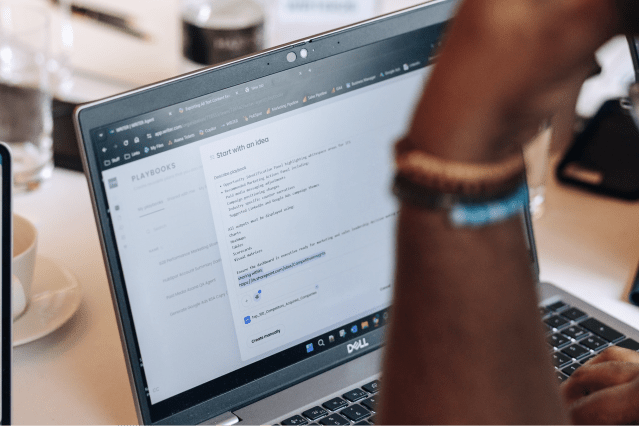
Matt from WRITER’s partnerships team demonstrated how accessible this transformation is by building a competitive intelligence agent live—from concept to working prototype in 15 minutes. He described what he wanted in plain language. WRITER Agent figured out the steps, connected to data sources, and output results to Slack. No coding. No prompt engineering.
Practical next steps
Colin’s advice: 20 hours to get ahead
“Get in there yourself. Have it on your desktop. Create things. No one’s going to see it—just mess around with it.”
Colin recommended 20 hours over the next month to get ahead of 95% of peers. Not watching demos. Not reading case studies. Hands-on exploration.
AJ’s advice: Find your champions
“Learn by doing. Find your champions. Those people will exist in your organization—the early adopters who will absolutely run with this. Empower them. Don’t go top down, because fundamentally, you don’t know what problems you’re going to solve. The people on the ground do.”
The stakes
The companies pulling ahead are rebuilding the workflows that move the business. They’re collapsing coordination tax, eliminating momentum killers, and giving people leverage to do work that matters.
CMOs without AI fluency won’t be hired for their next role. The transformation is happening whether you lead it or not.
Want to see agentic marketing in practice? Join the conversation at upcoming GTM Executive Series events in Chicago, NYC, and San Francisco. See how CMOs are building agentic workflows that deliver measurable business value. Register now.